Why I Started Exploring VR as a Music Space
The Metaverse After the Hype
A few years ago, the words “VR” and “metaverse” were everywhere.
Many people believed they would become the next major platform after social media.
Today, that excitement has calmed down significantly.
So what exactly is the metaverse?
And what makes it different from traditional online games?
Is the Metaverse Just an Online Game?
At first glance, they may look very similar.
Games like Final Fantasy XIV, Lineage, or Minecraft already allow people to connect, communicate, and spend time together online.
But I feel there is an important difference.
To me, the difference is this:
Is it a playground designed for a specific purpose,
or a space where people can freely create their own presence and culture?
Traditional MMORPGs are usually built around worlds designed by companies.
Players participate inside rules and narratives prepared in advance.
The metaverse feels different.
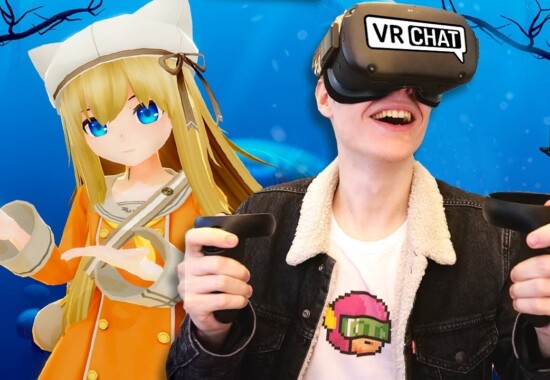
In spaces like VRChat, users themselves create worlds, events, communities, and atmospheres.
The culture emerges from the people inside it.
From Television to YouTube
This difference reminds me of the shift from television to YouTube.
Television is mainly a one-way structure created by companies.
YouTube, despite being owned by a platform company, became a place where users themselves shape the culture.
I feel the metaverse may evolve in a similar way.
Why VR Feels Different
The real world has become increasingly unstable.
Traveling freely across countries and cultures no longer feels as simple as it once did.
At the same time, digital spaces remain open.
Inside VR spaces, people from different countries can still gather in the same place, experience the same atmosphere, and share the same moment.
When I first entered VRChat, I felt something different from ordinary social media.
It was not just about “watching.”
It felt closer to “being there.”
Why I Connect VR and Music
I create music mainly in the fields of Minimal Techno, IDM, and Ambient.
These genres are not only about melodies or lyrics.
They are also about atmosphere, texture, repetition, and space itself.
That is why I became deeply interested in the relationship between music and virtual spaces.
I feel VR spaces have the potential to transform music from something we simply listen to, into something we can enter.
What I Am Exploring Through ZONE
I am still in the experimental stage.
Recently, I have been creating VR worlds where sound reacts to space and visuals, while continuing to explore how music can become part of an immersive environment.
ZONE is part of that exploration.
I believe VR spaces may become more than entertainment in the future.
They may become places where culture, presence, and new forms of connection are created.
And I want to continue exploring that possibility through music.
- Why music may become part of presence
- What Meta Ray-Ban Display May Tell Us About the Future of VR and AR
関連記事一覧
What Meta Ray-Ban Display May Tell Us About the Future of V...
What the Metaverse Still Lacks: Beyond Games, Toward Intell...
VRChatってどう楽しむの?初心者向けガイド!How to Enjoy VRCh...
VRゴーグルなしでVRChatを始める方法 -How to Start VRChat Wit...

Why VRChat Matters — And What the Metaverse Makes Possible
